As someone who has built a professional workflow around drones, I rarely get emotional about policy. Regulations are part of the job. We adapt, we comply, and we move on. But what is currently happening to DJI in the United States feels different - and after listening carefully to Adam Welsh, DJI’s Head of Global Policy, it’s hard not to feel that something is fundamentally wrong.
This isn’t about airspace rules, remote ID, or safety standards. This is about a company potentially being pushed out of a market without evidence, without due process, and without a completed investigation.
At the centre of this situation is Section 1709 of the U.S. National Defense Authorization Act (NDAA). On paper, it sounds reasonable: DJI would only face restrictions if a U.S. intelligence agency audited its products and found them to be a national security risk.
In reality, the law was written in a way that almost guarantees failure.
No specific agency was assigned to conduct the audit. Five different agencies could do it - but none are required to. The result? Everyone points elsewhere, and nothing happens. Worse still, the law includes a ticking clock: if no audit is completed within 12 months, DJI is automatically punished anyway.
Think about that for a moment.
No evidence. No findings. No conclusion. Still banned.
DJI has spent the past year doing something almost unheard of: actively asking to be audited. They’ve gone from agency to agency saying, “Please review our products.” And still - nothing.
What makes this even more frustrating is that DJI has already been reviewed multiple times in the past. U.S. government bodies, including the Department of Homeland Security, the Department of the Interior, and even the Pentagon’s consumer technology office, have previously examined DJI drones.
No one found a “smoking gun.” No hidden data pipelines. No espionage.
If DJI were truly a spying tool, evidence would exist by now. In other cases, bans happened after proof was found - not before.
Without naming competitors, Adam Welsh makes it clear that lobbying pressure from domestic manufacturers has played a major role. The narrative is familiar: “Chinese drones are a threat,” repeated loudly and often, but rarely supported with technical facts.
Let me be clear: building a domestic drone industry is important. Especially for defence applications. But DJI has never wanted to be part of that space. DJI builds civilian tools - flying cameras that need to be reliable, predictable, and safe.
As pilots and creators, we choose DJI not because it’s cheap, but because it works. Because it flies properly. Because it doesn’t fall out of the sky.
Removing competition doesn’t create innovation. It removes the pressure to improve - and the people who suffer are the professionals who rely on these tools to make a living.
One of the most common fears I hear is this:
“What if DJI can shut down all drones in a war?”
According to DJI, this simply doesn’t align with how their systems work. DJI drones can operate fully offline using Local Data Mode. They can be integrated with Western software and run on private servers. From a technical perspective, the risks often discussed online are manageable, solvable, and already mitigated.
Again, if regulators had concrete concerns, DJI has repeatedly said they are willing to address them directly. The problem is that those conversations never seem to happen.
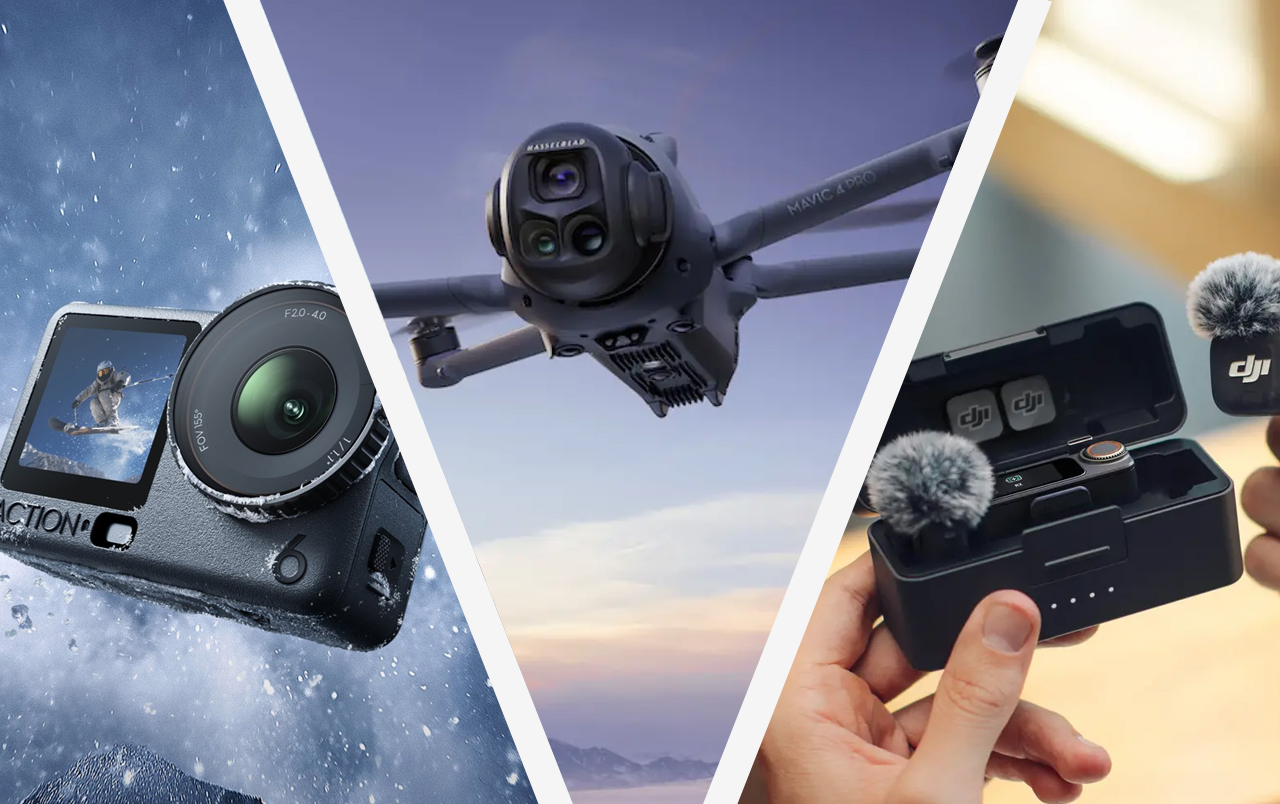
If nothing changes, DJI could be placed on the FCC “covered list.” Best case? No new DJI products in the U.S. market. Worst case? A retroactive ban that removes DJI hardware entirely from U.S. retail channels - not just drones, but microphones, action cameras, and filmmaking gear.
Existing owners would still be allowed to use what they already have, but servicing, replacements, and new purchases could become extremely difficult.
The broader economic impact would be severe. Welsh cites figures showing that around 460,000 U.S. jobs and $116 billion in economic activity rely on DJI products. Surveys indicate that two-thirds of drone service providers would go out of business without access to DJI equipment.
It’s easy for those of us outside the U.S. to shrug and say, “This is an American problem.” I don’t think that’s true.
If a global company can be sidelined by inaction rather than evidence in one major market, that precedent matters everywhere. Today it’s drones. Tomorrow it could be cameras, software, or any technology that becomes politically inconvenient.
As pilots, creators, and professionals, we should care deeply about how these decisions are made - not just what the outcome is.
DJI has said they are not giving up. And after listening to this interview, I believe them. But they shouldn’t be fighting this alone.
If you’re based outside the United States, your voice still matters. This isn’t only about American pilots - it’s about how technology companies are judged globally.
Stay informed, challenge unproven narratives, and support organisations that advocate for evidence-based policy. Even sharing accurate information within our own communities helps prevent fear from replacing facts.
What happens in one market often sets the tone for others.
ðŸ›©ï¸ Drone Advocacy Alliance - Take Action Page
This page has a website tool that helps people contact U.S. Senators, House Representatives, and other policymakers about pending drone legislation — including the NDAA review and any potential DJI restrictions. It will typically generate a pre-written message that you can customise before sending.
🔗 Take Action - Drone Advocacy Alliance: https://droneadvocacyalliance.com/take-action/
The release of DJI’s O4 system has sparked excitement among FPV pilots, but some users...
READ MORE
The highly anticipated DJI Mavic 4 Pro is set to launch soon, and new leaks...
READ MORE
The DJI O4 Air Unit Pro represents a significant advancement in the realm of FPV...
READ MORE
The DJI Glide is not your average drone. This innovative concept, designed by Baptiste Grenon...
READ MORE
Exciting news is on the horizon for FPV enthusiasts as DJI prepares to release...
READ MORE
As a Maltese traveler, visiting Morocco offers an unforgettable experience, full of vibrant culture, diverse...
READ MORE
Drone pilots using DJI’s 03 Unit with Goggles 3 are facing a serious issue, as...
READ MORE
The DJI Mini 4 Pro, a popular choice among drone enthusiasts, falls under two potential...
READ MORE
The markings found on SD or microSD cards provide essential information for users to determine...
READ MORE
In FCC mode, there are 7 available channels in the 20MHz mode and 3 available...
READ MORE
Hey, drone enthusiasts! Welcome back to our Blog. Today, we've got something truly exciting in...
READ MORE
Lithium Polymer (LiPo) batteries are a staple in the RC hobbyist world, particularly in FPV...
READ MORE
